


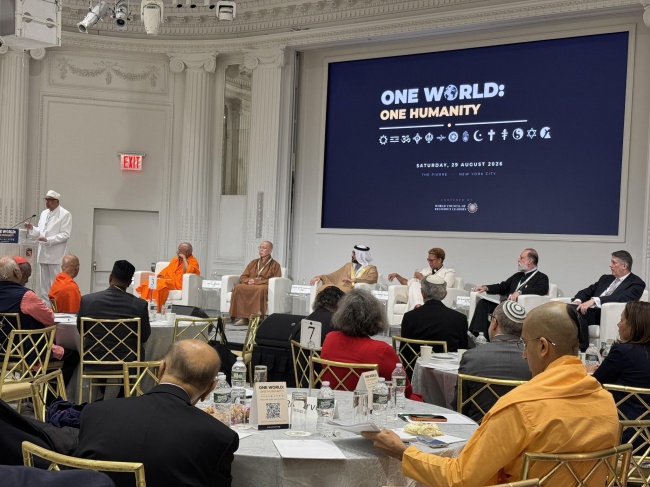
2026年8月29日,纽约道教协会(Taoist Association of New York)会长吴丞泽受邀参加由世界宗教领袖理事会(World Council of Religious Leaders)在纽约举行的宗教领袖聚会,与来自不同国家、宗教传统、学术机构及社会组织的宗教领袖和代表共同交流,就和平建设、跨宗教合作、社会责任以及科技发展带来的伦理挑战等当代议题展开讨论。
此次会议延续了世界宗教领袖理事会自2000年以来推动全球宗教合作的精神。2000年,来自世界各地的宗教与精神领袖齐聚联合国,参加“千禧年世界宗教与精神领袖和平峰会”(Millennium World Peace Summit of Religious and Spiritual Leaders)。此后成立的世界宗教领袖理事会持续致力于汇聚不同宗教传统的精神与道德资源,将其运用于和平、正义与维护人类尊严等全球性议题。
从对话走向行动:宗教如何回应当代社会
本次聚会特别强调“从反思走向行动”,并提出“行动,而非象征”(Action, Not Symbolism)的理念。
会议认为,不同宗教领袖共同出席、合影以及表达共同价值只是跨宗教合作的起点,真正重要的是如何将宗教对话转化为能够进入社区、回应现实问题并产生持续影响的实际行动。
围绕这一理念,与会宗教领袖重点讨论了四个当前具有紧迫性的议题:和平与冲突的修复;共同反对针对不同宗教群体的仇恨与暴力;宗教社区参与生命关怀、公共健康以及应对成瘾和绝望等社会问题;以及人工智能快速发展背景下,人类尊严、伦理与科技之间的关系。
会议同时鼓励每位参与者将一项具体行动承诺带回自己的社区,并通过持续沟通和阶段性反馈,使一次宗教领袖会议进一步转化为长期的社会实践。
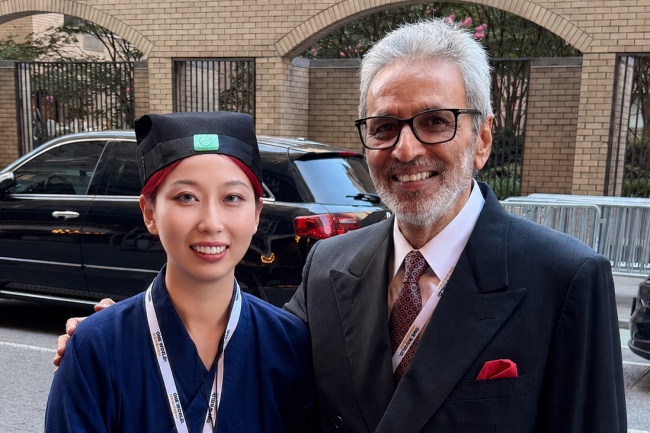
与世界宗教领袖理事会秘书长 Bawa Jain 交流
活动期间,纽约道教协会会长吴丞泽与世界宗教领袖理事会秘书长 H.E. Bawa Jain 进行了友好交流。
Bawa Jain 长期致力于国际跨宗教对话、和平倡议及宗教外交,并曾担任2000年“千禧年世界宗教与精神领袖和平峰会”秘书长。多年来,他持续推动来自不同信仰传统的宗教领袖围绕和平、人类尊严以及共同社会责任建立交流与合作。
此次交流也使纽约道教协会进一步与国际跨宗教网络建立联系,并向来自不同宗教传统的与会者介绍道教及纽约道教协会在当地开展的相关工作。
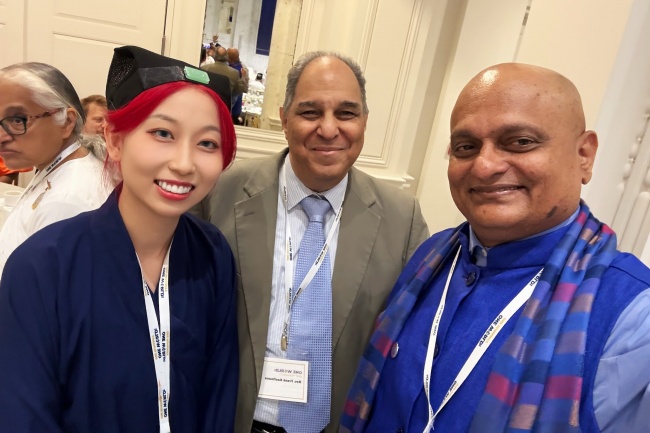
与跨宗教领袖及宗教学者深入交流
活动期间,纽约道教协会会长吴丞泽与 Guruji His Holiness Dileepkumar Thankappan(Guru Dileepji)以及美国宗教学者、跨宗教和平建设者 Dr. Frank Kaufmann 进行了深入而友好的交流。
Guru Dileepji 是长期活跃于跨宗教、人道主义、和平倡议及瑜伽领域的精神领袖、跨宗教牧师(Interfaith Minister)、人道主义工作者及瑜伽导师,并长期参与国际跨宗教事务及联合国相关活动。他同时担任多项宗教、人道主义及非政府组织职务,并以非政府组织代表身份参与联合国体系相关国际交流,致力于推动不同宗教传统之间的理解、世界和平、人道关怀及身心健康。
多年来,Guru Dileepji 将精神实践与社会行动相结合,通过跨宗教活动、和平倡议、人道主义项目及国际交流推动不同文化和信仰背景人士之间的沟通与合作。其工作体现了宗教及精神传统不仅作为个人修行方式,也能够参与和平建设、社会服务与跨文化理解。
Frank Kaufmann 博士拥有范德堡大学(Vanderbilt University)宗教学博士学位。他运营着多个非营利组织,这些机构分别致力于宗教与和平、教育诚信、美国社会与文化复兴,以及负责任的美国外交政策。他在宗教、跨宗教关系、和平建设和冲突调解等领域的工作已持续数十年。
Kaufmann 博士将宗教的学术研究与实际的和平建设工作相结合。他的工作足迹遍及全球65个以上的国家和地区,并曾参与多个受到冲突和流离失所问题影响地区的相关工作,包括以色列和巴勒斯坦、印度和克什米尔、克罗地亚难民营、厄立特里亚—埃塞俄比亚边境、菲律宾南部、斯里兰卡以及其他地区。
在长期的工作中,Kaufmann 博士一直探索不同宗教如何在保持各自独特信仰与文化身份的同时,通过对话、调解与合作,与彼此展开建设性的互动。这一理念与本周六会议所强调的“行动,而非象征”(Action, Not Symbolism)高度契合。
在与吴女士交流期间,Guru Dileepji 和 Kaufmann 博士都对纽约道教协会以及道教传统表达了热情而开放的兴趣。吴女士向他们介绍了道教的一些美好与魅力,并与二人就不同宗教传统之间的相互理解、跨宗教对话,以及宗教社群在当代社会中能够发挥的作用交换了看法。
此次交流进一步加深了彼此的理解,并为纽约道教协会加强与国际跨宗教领袖、宗教学者及相关机构之间的联系奠定了积极基础,同时也有助于将道教的观点带入更加广阔的跨宗教与跨文化对话之中。
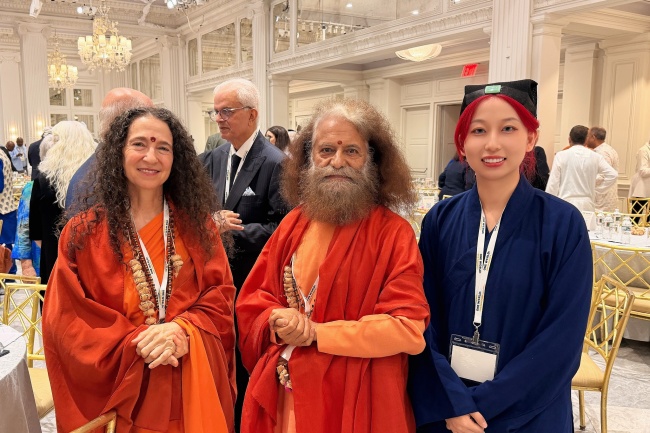
让道教声音进入纽约多元宗教交流
除上述嘉宾外,吴丞泽当天还与来自不同国家、信仰传统、宗教机构及社会各界的多位宗教领袖和代表进行了广泛交流。
作为扎根纽约的道教宗教组织,纽约道教协会近年来持续开展道教宗教服务、传统文化教育、社区活动及跨文化交流。此次参加世界宗教领袖聚会,也使协会能够在更广泛的国际及跨宗教语境中介绍中国道教传统,并了解其他宗教团体参与社区服务、和平建设及社会公共事务的经验。
吴丞泽表示,不同宗教拥有各自独特的历史、教义、仪式与文化传统,跨宗教交流并不意味着消除彼此之间的差异,而是在尊重不同传统的基础上建立理解,并寻找能够共同服务社会、维护和平与关怀生命的合作空间。
对于纽约道教协会而言,参与此次活动不仅是一次国际跨宗教交流,也是道教在纽约多元宗教社会中进一步建立联系的一次实践。
未来,纽约道教协会将继续立足道教传统,在坚持自身宗教传承与文化特色的基础上,加强与不同宗教团体、学术机构及社会组织之间的交流,积极参与纽约多元宗教社区建设,并推动道教关于和谐、生命关怀以及人与社会、人与自然关系的传统智慧进入更广泛的当代公共对话。
In-Depth Exchange with Interfaith Leaders and Religious Scholars
During the gathering, Chengze Wu, President of the Taoist Association of New York, had a warm and substantive exchange with Guruji His Holiness Dileepkumar Thankappan (Guru Dileepji) and American scholar of religion and interfaith peacebuilder Dr. Frank Kaufmann.
Guru Dileepji is a spiritual leader, interfaith minister, humanitarian, and yoga master who has long been engaged in interfaith dialogue, humanitarian service, peace initiatives, and international cooperation. He has participated extensively in international interfaith affairs and United Nations-related activities, including serving as an NGO representative in connection with the United Nations. His work has focused on fostering understanding among different religious traditions, promoting peace and humanitarian values, and advancing physical, mental, and spiritual well-being.
Over the years, Guru Dileepji has sought to connect spiritual practice with social action through interfaith initiatives, humanitarian projects, peace advocacy, and international engagement. His work reflects the broader role that religious and spiritual traditions can play not only in individual spiritual practice, but also in peacebuilding, service to society, and cross-cultural understanding.
Dr. Frank Kaufmann holds a Ph.D. in Religion from Vanderbilt University. He runs several not-for-profit organizations dedicated to religion and peace, integrity in education, social and cultural renewal in America, and responsible US foreign policy. His work in the arena of religion, interfaith relations, peacebuilding, and conflict mediation spans decades.
Dr. Kaufmann combines the academic study of religion with practical peacebuilding efforts. His work has taken him to more than 65 countries and regions and has included engagement in areas affected by conflict and displacement, including Israel and Palestine, India and Kashmir, Croatian refugee camps, the Eritrea–Ethiopia border, the southern Philippines, Sri Lanka and elsewhere.
Throughout his work, Dr. Kaufmann explores how religions can preserve their distinct faith and cultural identities while engaging constructively with one another through dialogue, mediation, and cooperation. This approach closely resonates with this Saturday’s conference emphasis on “Action, Not Symbolism.”
While sitting with Ms. Wu, Guru Dileepji and Dr. Kaufmann expressed a warm and open interest in the Taoist Association of New York and the Taoist tradition. Wu explained some of the beauty of Taoism, and exchanged views with them on mutual understanding among religious traditions, interfaith dialogue, and the role that religious communities can play in contemporary society.
The exchange deepened mutual understanding and laid a positive foundation for the Taoist Association of New York to strengthen its connections with international interfaith leaders, scholars of religion, and related organizations, while bringing Taoist perspectives into a broader landscape of interfaith and cross-cultural dialogue.